01 / Give the idea a format
Choose one thing you want the reader to carry away: a small story, an observation or a particular sequence of images. Gather more material than you need, then set aside anything that does not serve that idea. A smaller selection makes the first dummy easier to read.
Fold and number a blank booklet. For a simple folded and saddle-stitched format, work in multiples of four pages. Remember that the cover occupies pages too. Hold the dummy at a comfortable reading distance and consider whether its size suits the marks, images and text you have.
02 / Rehearse the printing
Use rough prints or paper scraps to place your content. Begin with the opening, a central moment and an ending, then work on the transitions. Try leaving a page almost empty. A quiet page can give the next image a stronger arrival than another competing spread.
Before printing an edition, test the actual paper and process. For layered colour, keep one sheet that shows each ink alone and another that shows the overlap. Note the order and any registration shift. Screens and printed inks behave differently, so treat the digital preview as a plan rather than a promise.
03 / Bind, read and revise
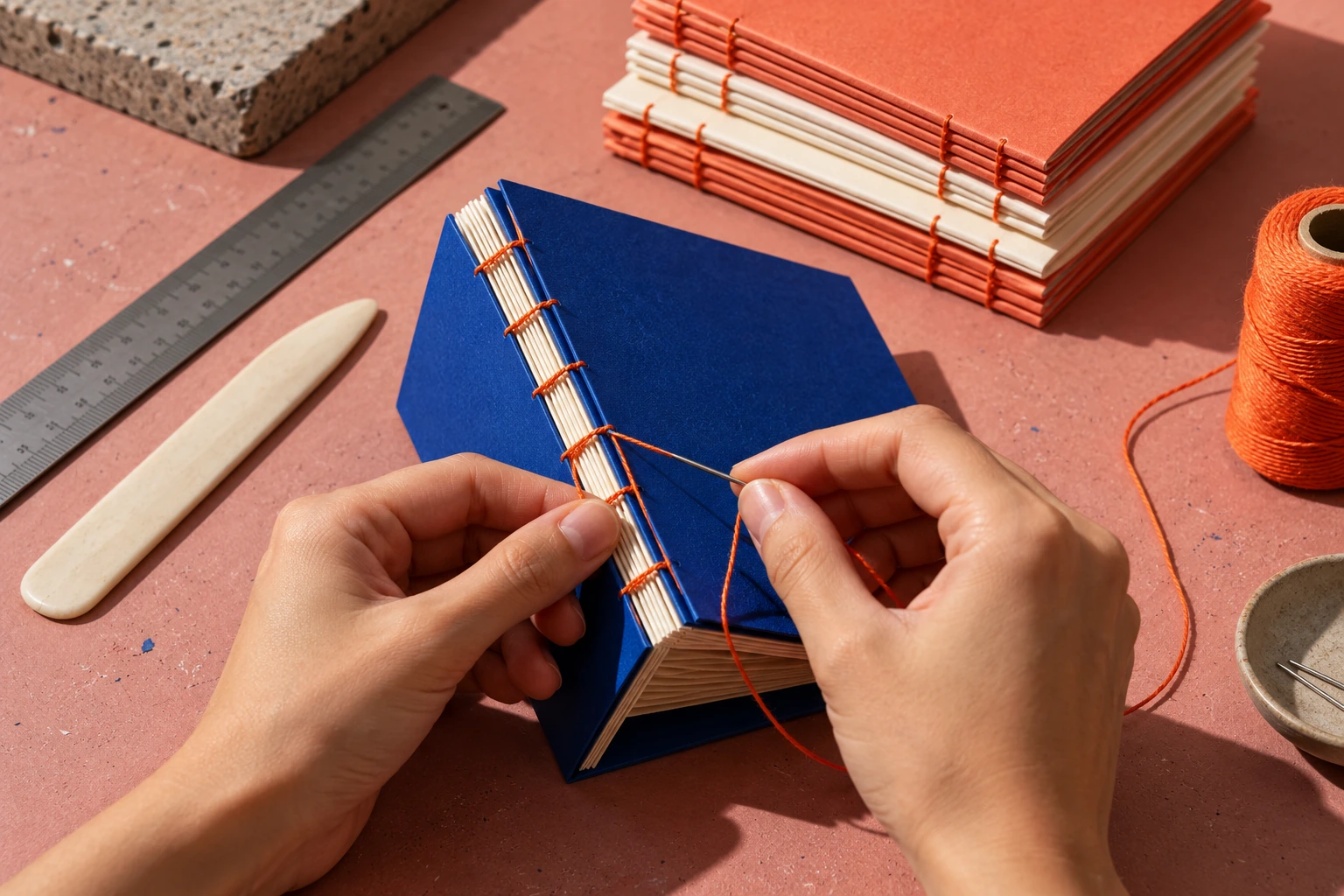
Assemble one complete copy with the intended binding. Turn every page, including the centre. Check that content does not disappear into the fold and that the paper can move comfortably. A beautifully printed sheet is not enough if the finished booklet is difficult to hold.
Ask someone to read the dummy without your explanation. Notice where they turn back, hesitate or miss a connection. Change the sequence or spacing before adding more material. When you are ready to produce copies, use the edition planner as an estimate and allow for the setup your actual printing process requires.
Keep a marked dummy, a clean paper sample and your layer notes. These three modest records make a second edition much easier to plan.
Your working checklist
- Number the dummy before arranging artwork.
- Include the cover in your page count.
- Test the chosen paper and binding together.
- Credit source material and collaborators in a short colophon.